
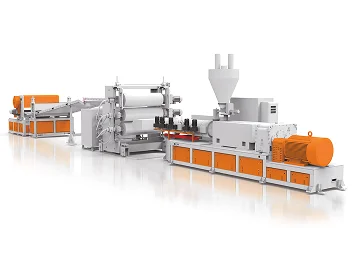
Calender Roller Metallurgy and Thermal Management
Achieving flawless surface aesthetics in modern manufacturing requires advanced industrial equipment. When we process dense thermoplastic composites, we understand that exceptional component durability remains our top priority. By integrating heavily engineered systems designed by Boyu, we secure the mechanical stability needed for high-volume commercial runs. Durable machinery directly prevents costly operational disruptions during demanding production shifts.
Calender rollers serve as the most critical functional components within these robust processing facilities. They determine the final thickness, density, and glossy finish of every single extruded board. We rely on the precision manufacturing standards provided by Boyu to maintain strict dimensional accuracy. Flawless roller geometry ensures that the thermoplastic melt flattens out perfectly without generating internal material stress.
Roller material and construction play an important role in long-term calendering performance. Selecting appropriately engineered roller components can help support stable operation under continuous production conditions. Properly designed and maintained rollers can also contribute to consistent sheet forming and reliable production performance.
Surface treatment plays an important role in maintaining consistent sheet appearance during calendering. The roller surface should be properly finished and maintained to support smooth material forming and reduce the risk of material buildup during production. Regular inspection of roller surfaces can also help maintain consistent processing performance over time.
Internal thermal management within the calendering system is important for maintaining stable sheet forming and dimensional consistency. The production line uses controlled cooling to help stabilize the sheet after forming. Maintaining appropriate and consistent cooling conditions can support product quality and reliable downstream processing.
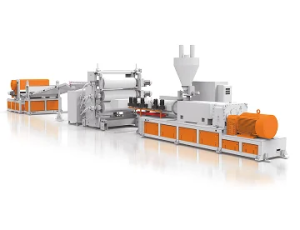
Integrating Precision Rolling Technology
Seamless integration of the extrusion and calendering stages is important for maintaining stable sheet production. When we configure a modern pvc marble sheet production line, we prioritize coordinated operation between the extruder, T-die, calender, and downstream equipment. Proper synchronization can help reduce material instability and support smoother sheet handling throughout the production process.
Velocity coordination between the calender and downstream equipment is important for maintaining stable sheet handling. Appropriate control of operating speed can help maintain consistent sheet dimensions and reduce the risk of material instability during production. Digital control systems can also help operators monitor key production parameters and make necessary adjustments when required.
Calender gap and roller pressure should be adjusted according to the required sheet thickness and processing conditions. Appropriate adjustments can help maintain consistent sheet dimensions as material passes through the pvc marble sheet production line. Regular monitoring of operating parameters also allows operators to make timely adjustments when production conditions change.
For decorative sheet applications that require additional surface layers, downstream finishing processes should be coordinated carefully with the calendering stage. Appropriate process settings can help maintain consistent surface appearance and product quality. The specific finishing process can be selected according to the final product requirements and production configuration.
Handling mechanical wear requires proactive monitoring strategies throughout our facility. Our maintenance supervisors track cumulative operational hours to predict when heavy bearings and transmission gears might require replacement. We schedule comprehensive structural evaluations during planned factory downtime to avoid unexpected machinery failures. Keeping rotating components in pristine condition minimizes destructive vibrations that could ruin the surface quality of the final board.
Maintaining Long-Term Mechanical Reliability
Prolonging the operational lifespan of heavy industrial equipment requires regular maintenance routines. Whenever we manage a sophisticated pvc marble sheet machine, we implement appropriate cleaning procedures after production runs. Removing residual thermoplastic material from roller surfaces can help reduce material buildup and maintain consistent surface quality during subsequent production runs.
Proper lubrication schedules can help support reliable operation of bearings and other moving components. Our maintenance technicians follow appropriate lubrication procedures for the active pvc marble sheet machine and inspect relevant components regularly. Proper maintenance can help reduce unnecessary mechanical friction and support stable equipment operation over the long term.
Alignment verification can help identify conditions that may affect roller performance and sheet thickness. During routine maintenance, our engineering teams check the alignment and operating condition of the pvc marble sheet machine to help maintain consistent roller performance. If abnormal vibration or alignment issues are identified, appropriate maintenance and adjustment can be carried out to support stable production.
Continuous quality control inspections provide useful feedback regarding sheet appearance and production performance. Our operators can inspect finished sheets for surface scratches, gloss variations, and other appearance defects during production. If defects appear, operators can inspect the calendering system and related processing parameters to identify possible causes and make appropriate adjustments. Regular quality inspections can help reduce unnecessary material waste and support consistent product quality.
Ultimately, durable and properly maintained calender rollers can support stable sheet forming, consistent surface quality, and reliable production performance. Regular maintenance and appropriate operating parameters can also help reduce unnecessary downtime and extend the useful operating life of critical equipment. For manufacturers producing synthetic architectural sheets, these practices can contribute to more consistent output and long-term production efficiency.