

In PVC extrusion, raw material variation is an unavoidable production variable. Inconsistencies in formula ratios between batches can work their way into the extrusion process and surface as scrap, thickness deviation, or unscheduled downtime. How well a line handles that variation often comes down to the design and configuration of the extrusion machine. This article examines where formula variation originates in PVC extrusion, what equipment characteristics determine how much of it reaches the finished product, and how Boyu Machinery approaches this as a design consideration across its extrusion machine range.

Where Production Variation Actually Starts
Formula drift in plastic extrusion materials rarely announces itself. Calcium carbonate density can shift between supplier batches, which means volumetric feeders may deliver inconsistent quantities even when their settings remain unchanged. Powder moisture content tends to vary with storage conditions, further affecting flow behavior and feeder accuracy. Stabilizer and lubricant additions present a similar challenge: used in small quantities but influential on melt behavior, they are particularly sensitive to measurement error across shifts.
None of these factors typically trigger an immediate alarm. Rather, they tend to accumulate through the mixing and feeding stages and become visible later in the product.
In SPC flooring production, for instance, the standard PVC-to-calcium carbonate ratio runs at 1:3. When that ratio drifts, the consequences vary by direction: excess filler can produce boards that are brittle and more prone to cracking, whereas insufficient filler may raise material cost and alter melt viscosity in ways that affect surface finish and dimensional consistency.
Similar sensitivities apply across WPC, LVT, PVC foam board, marble sheet, and profile lines, particularly in applications where formula consistency directly influences structural performance.
What Your Extrusion Line Needs to Handle It
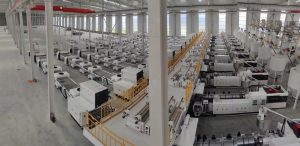
Since upstream material variation is difficult to eliminate entirely, the more practical question is whether your PVC extrusion line can absorb it before it affects the finished product. That ability is not guaranteed — it tends to come down to four equipment characteristics.
Screw Design for High-Fill Formulations
A screw geometry developed for high-calcium materials can help maintain consistent plasticization even when filler ratios shift between batches. General-purpose screw designs, by contrast, may show signs of strain earlier, including melt inconsistency and pressure fluctuation at the T-die, because they are less able to compensate for changes in material density and flow behavior.
Drive Torque Stability
Stable melt pressure at the T-die is one of the key factors in maintaining consistent board thickness and surface quality. If a drive system allows torque to fluctuate — whether due to motor sizing, speed control precision, or transmission wear — minor formula variation can translate into thickness deviation at the T-die exit. A more stable drive system tends to keep the process window tighter, reducing the likelihood that normal batch-to-batch differences become measurable defects.
Calender Control
The calender is one of the last stages in the process where operators can still intervene before the board reaches its final dimensions. Variation in melt quality arriving from the extruder can still be partially addressed at this stage through roll pressure and speed adjustments, which makes calender controllability a relevant factor when evaluating how much tolerance a line has for upstream material variation.
Automated Process Monitoring
A PLC system that tracks temperature, pressure, and line speed in real time can help narrow the gap between when a deviation begins and when it is corrected. This matters because the cost of any variation event is often tied to how quickly it is detected: catching a pressure drift early may limit the affected output to a short run, whereas a delayed response can result in a larger volume of product that requires review or rework.
How Boyu Machinery Extrusion Lines Are Configured for Stability
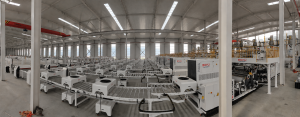
Boyu Machinery designs its range of PVC extrusion machines covering SPC, WPC, LVT, foam board, marble sheet, and profile lines with the expectation that incoming raw material conditions will vary between batches. Rather than treating stability as an optional feature, Boyu Machinery is one of the PVC extrusion suppliers that approaches this as a baseline design requirement rather than an afterthought.
Several specific component choices contribute to this:
- Drive stability: Boyu Machinery specifies Inovance, ABB, or Siemens frequency inverters paired with NSK or SKF transmission bearings, helping maintain torque consistency within a range where normal formula variation is less likely to produce measurable thickness deviation at the T-
- Process control: The PLC system runs on Omron or Siemens hardware with Schneider low-voltage components, providing continuous monitoring of key process parameters across the line.
- Screw configuration: The conical twin-screw design used across Boyu Machinery’s PVC extrusion line range delivers strong plasticization performance even under high-fill conditions, allowing the screw to absorb a degree of material variation before it reaches the T-die and easing the adjustment burden on later stages of the process.
Taken together, these component choices keep normal production variation within the process window, effectively reducing the risk that routine batch-to-batch material differences translate into output inconsistency or unplanned downtime.
Conclusion
Raw material variation is a recurring factor in PVC extrusion production, and its effects are not always immediately visible. While upstream process controls can help reduce formula drift, the extrusion machine itself plays a significant role in determining how much variation reaches the finished product. Equipment selection is worth considering alongside raw material management.
What has been the most challenging aspect of managing material variation in your production process? Leave a comment below or reach out to Boyu Machinery directly to discuss your specific situation.