
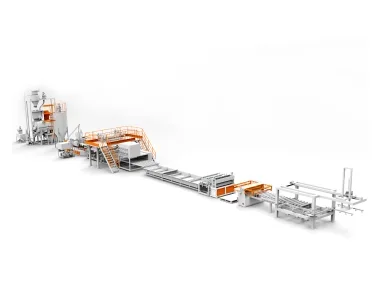
At Boyu, we closely study how different screw designs affect the performance of LVT flooring production line systems. Selecting the right extrusion configuration plays a crucial role in balancing production efficiency, material consistency, and surface quality. Through years of experience with our LVT Flooring Extrusion Line, we have observed that conical and parallel twin-screw systems can produce noticeably different results depending on material formulation, production speed, and line setup. Understanding these differences allows us to design machinery that meets precise production needs while maintaining stable output across varied working conditions. Our team often works directly with clients to ensure that each system is optimized for their specific requirements and intended flooring applications.
Understanding the Differences in Screw Design
Conical and parallel twin-screw configurations each provide unique processing characteristics. A conical screw gradually increases pressure along the barrel, improving material mixing and reducing shear stress, which can be especially beneficial for blends containing fillers or complex polymer compositions. Parallel twin-screw systems, on the other hand, maintain consistent screw speed and residence time, which helps achieve uniform throughput and predictable material behavior. In our LVT flooring extrusion line, we implement Precision LVT Extrusion Technology to optimize these processes. By carefully selecting screw geometry, adjusting temperature profiles, and controlling feed rates, we ensure smooth and consistent material flow. This approach reduces the risk of defects such as surface irregularities, warping, or color inconsistencies, supporting reliable performance over long production runs.
How We Apply Technology in Practice
At Boyu, we incorporate these insights into practical production solutions. Our Flexible LVT Flooring Production Solutions allow manufacturers to select screw configurations that best match their material characteristics and operational goals. Conical twin-screw designs are ideal for lines producing complex or highly filled LVT formulations, while parallel twin-screw setups work efficiently for high-speed lines that prioritize throughput and dimensional stability. We also prioritize Smooth and Uniform Surface Output, ensuring that the final product meets both aesthetic and functional standards. By combining over twenty years of engineering experience, proprietary patents, and real-world testing, our extrusion lines offer both adaptability and reliability. Additionally, our team provides guidance on process optimization, allowing clients to fine-tune operating parameters and maintain consistent performance across varying production volumes and environmental conditions.
Conclusion: Choosing the Right Extrusion Line
Choosing between a conical or parallel twin-screw LVT flooring extrusion line requires careful evaluation of production objectives, material behavior, and desired output characteristics. At Boyu, we approach each project individually, integrating engineering expertise, system customization, and process optimization to deliver lines that align with specific manufacturing needs. Our LVT flooring production line systems are designed to ensure stable, predictable performance, allowing manufacturers to maintain high standards while adapting to changing market demands. By considering factors such as throughput, surface quality, and material composition, we help clients make informed decisions that support long-term operational efficiency and product consistency. This focus on technology-driven solutions ensures that our extrusion systems continue to provide value, precision, and reliability in 2026 and beyond.