
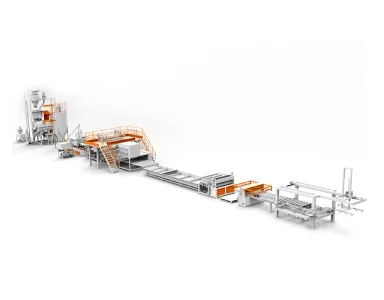
The LVT flooring market is evolving rapidly, and manufacturers are seeking reliable systems to meet diverse installation methods. At Boyu, we have observed an increasing demand for LVT flooring extrusion line solutions that support both loose-lay and dry-back production. Our experience demonstrates that the choice of machinery directly influences efficiency, material utilization, and final product consistency. With over 22 years in the industry, we focus on designing extrusion lines that combine stable performance with flexible production capabilities. The transition to versatile LVT production requires equipment that can adapt to multiple formats without compromising board quality or throughput. Our company has invested in professional R&D teams and technical departments to ensure each extrusion line meets modern production requirements while maintaining long-term reliability.
Understanding LVT Extrusion Technology
Efficient LVT flooring production line operation relies on precision in extrusion and material handling. Our LVT Flooring Extrusion Line utilizes Precision LVT Extrusion Technology, which ensures that vinyl layers are accurately laminated and formed. By carefully controlling temperature, pressure, and feed rate, we maintain smooth and uniform surface output, critical for both loose-lay and dry-back products. In addition, precise calibration of the rollers, die systems, and cutting mechanisms ensures dimensional stability across long production runs. We continually monitor material flow and machine dynamics to prevent inconsistencies, which is particularly important when producing varying thicknesses or decorative designs. This systematic approach allows us to reduce material waste while maintaining consistent quality, supporting manufacturers who require both aesthetic appeal and mechanical reliability in their LVT flooring.
Customization and Flexible Production
At Boyu, we recognize that each factory has unique production requirements. Our Flexible LVT Flooring Production Solutions allow customization for different thicknesses, widths, backing types, and design patterns. By adjusting die configurations, heating zones, and conveyance speeds, we can accommodate various LVT designs, including loose-lay and dry-back formats. Our engineering team collaborates closely with clients to evaluate workflow, material handling, and factory layout, ensuring that the LVT flooring extrusion line integrates seamlessly into existing operations. We also consider factors such as energy efficiency and changeover time to maintain a steady production schedule. Through this approach, our customers benefit from equipment that is both adaptable and reliable, supporting a broad range of flooring applications without compromising consistency or board quality.
Conclusion: The Role of LVT Extrusion Lines in Modern Production
In conclusion, the growing preference for loose-lay and dry-back flooring methods requires equipment that balances precision, flexibility, and consistent output. The LVT flooring production line plays a central role in enabling manufacturers to produce high-quality LVT efficiently. By combining our Precision LVT Extrusion Technology, Smooth and Uniform Surface Output, and Flexible LVT Flooring Production Solutions, we ensure that our extrusion lines meet the evolving needs of the flooring industry. At Boyu, we continue to refine our systems to support diverse production methods while maintaining operational stability. Through careful calibration, energy-conscious design, and tailored configurations, our solutions provide reliable tools for modern LVT flooring manufacturing. This approach allows our clients to achieve both consistent product quality and efficient production, responding effectively to market demands while leveraging the technical strengths we have developed over more than two decades.