
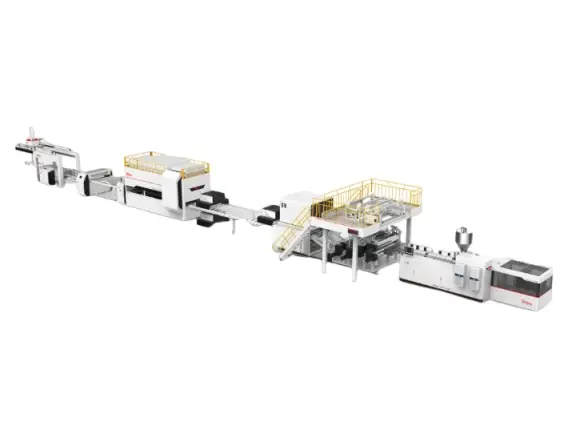
In 2026, manufacturers are placing greater emphasis on energy efficiency as production costs and environmental considerations continue to evolve. In our daily work, we have seen how the adoption of a more advanced SPC flooring extrusion line can directly influence power consumption and production stability. As Boyu, we understand that choosing the right SPC flooring production machine is no longer only about output, but also about how efficiently energy is used throughout the process. This shift reflects a broader industry adjustment toward balanced manufacturing, where efficiency, consistency, and long-term operation are all considered together rather than separately.
Evolving Requirements for Energy-Efficient SPC Equipment
Energy efficiency in modern SPC production is closely tied to system design and process coordination. A well-structured SPC flooring production machine reduces unnecessary energy loss by maintaining stable temperature control and consistent material flow. At the same time, a reliable SPC flooring extrusion line supports continuous operation with fewer fluctuations, which helps avoid excess energy consumption caused by repeated adjustments. In practical applications, this means equipment must operate under predictable conditions while adapting to different formulations. We have observed that energy saving is often achieved not through a single component, but through the integration of multiple systems working together in a coordinated way.
Practical Design Approach from Boyu
With over 22 years of experience, Boyu focuses on building systems that reflect real production needs rather than theoretical performance. Our SPC Flooring Extrusion Line is developed as a High-Efficiency SPC Extrusion System, where each module is configured to support Stable and Consistent Board Quality. By combining engineering experience with ongoing testing, we ensure that the SPC flooring extrusion line performs steadily across different operating conditions. We also provide Customized SPC Flooring Production Solutions, allowing each SPC flooring production machine to match factory layouts and material characteristics. Supported by our technical and project teams, as well as ISO 9001 quality management practices, our approach is centered on reliability and practical efficiency rather than complexity.
Conclusion: A Balanced Direction for Future SPC Production
The transition toward low-energy equipment is shaping how manufacturers evaluate their production lines in 2026. A carefully configured SPC flooring extrusion line helps maintain steady operation, while a well-designed SPC flooring production machine contributes to more controlled energy use. As we continue to refine our systems, we focus on aligning efficiency with consistent output and long-term usability. This approach reflects a gradual but clear direction in the industry, where energy efficiency becomes part of everyday production planning rather than an additional consideration. By combining stable design with adaptable solutions, we aim to support manufacturers in achieving reliable performance under evolving market conditions.