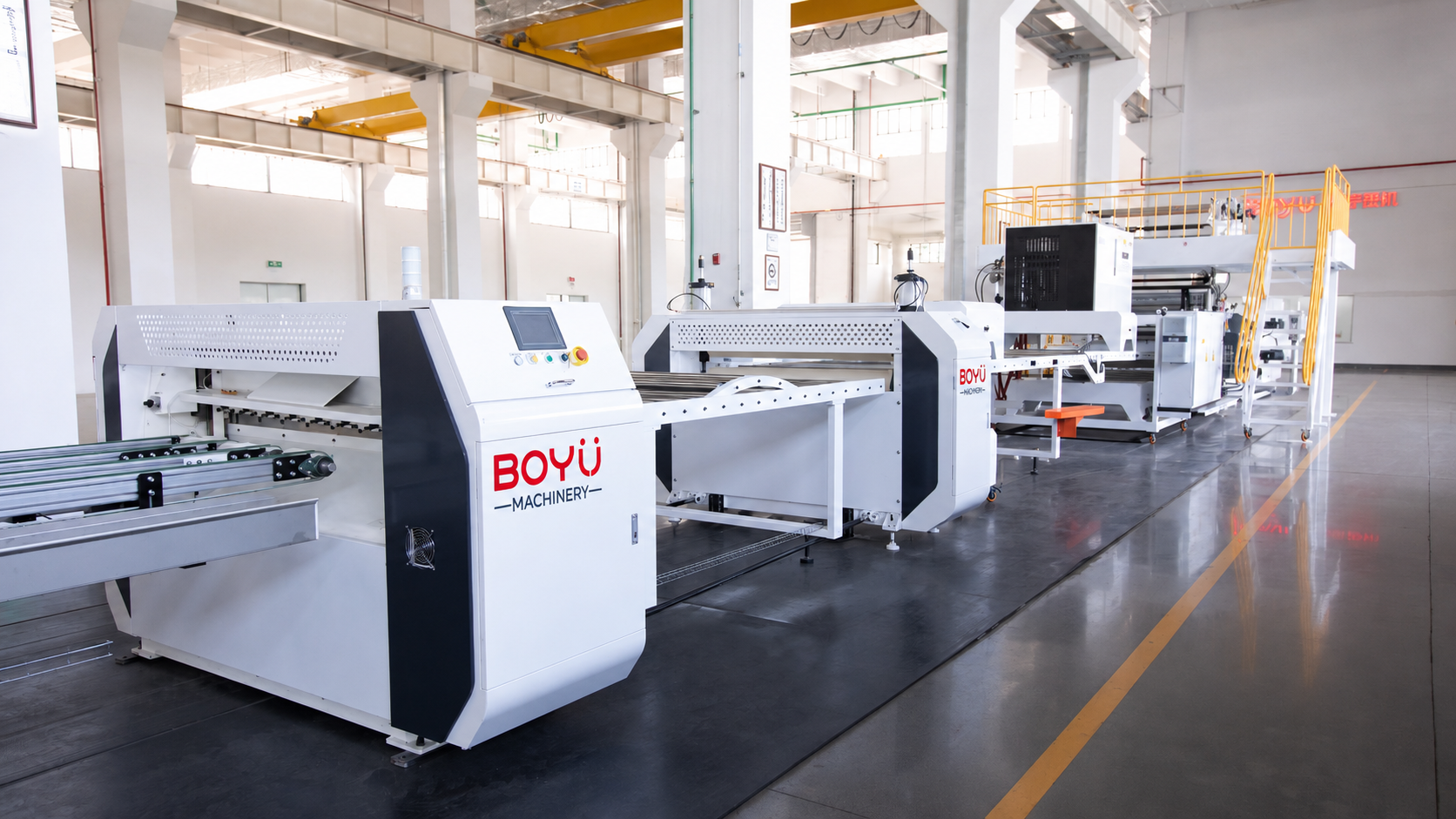
Choosing the right extrusion line is critical for ensuring consistent product quality and efficient production. Understanding key extrusion line parameters such as output stability, material compatibility, and system integration helps manufacturers make informed decisions and avoid costly mismatches in real-world applications.
This article explains how to choose an extrusion line by focusing on key parameters such as output stability, material compatibility, and system integration.
Which Key Extrusion Line Parameters Should You Focus On?
Output Stability Over Maximum Capacity
Stable output and continuous operation are generally more important than peak capacity, as fluctuations may lead to higher defect rates and some material waste. In actual selection, it should not rely solely on maximum capacity figures; the key is to evaluate how stable the system remains during long-term operation.
Achieving high Overall Equipment Effectiveness (OEE) fundamentally depends on process stability rather than short-term high-speed performance.
Die pressure monitoring is a key indicator for evaluating stability. Generally, the smaller the pressure fluctuation, the more stable the system control. In addition, the drive system must be strong enough to maintain a constant screw speed; otherwise, even a high-capacity design may result in dimensional inconsistency during real production.
Material–Screw Matching Efficiency
The compatibility between screw design and raw materials determines melt uniformity and plasticizing quality. This is one of the most underestimated factors in equipment selection, yet it directly affects scrap rate and process stability.
- A practical way to evaluate this is to observe whether frequent parameter adjustments are required during production. If temperature, pressure, or output needs constant correction, the screw configuration is likely not well matched.
For different material systems, optimized screw configurations should be selected, such as barrier screws combined with downstream mixing structures to improve dispersion. At the same time, L/D ratio and screw type (parallel or conical twin-screw) must be matched according to material viscosity and formulation requirements, such as PVC, PPR, or HDPE.
Temperature Control and Heating System Performance
Temperature control accuracy directly determines whether materials can be processed stably, and in real production, stability is more important than theoretical precision. Modern systems with PID control can maintain barrel temperature within ±1°C (Actual accuracy is subject to material, load, thermal, and environmental conditions), but the key is whether the temperature remains consistently stable without fluctuation or delay.
During selection, attention should be paid to:
- Whether the temperature response is stable or shows overshoot
- Whether different heating zones can be independently controlled
- Whether the melt state remains uniform during operation
If the temperature sensor is too far from the melt flow area, the measurement may not reflect actual processing conditions, which becomes critical in high-precision applications.
Multi-zone temperature control allows more precise adjustment of melt viscosity, which directly improves final product surface quality.
Die Head and Tooling Precision
The Die head design and manufacturing precision directly affect dimensional tolerance and surface quality. The melt flow surface typically needs to maintain a 4 to 8 micro-inch finish to promote uniform flow and prevent material stagnation (Specific requirements depend on the material type and the product’s surface quality grade).
In addition, the die exit edges must remain sharp and intact, as even minor defects may become sources of resin degradation or surface streaking. For precision tubing production, flow conditions are usually controlled by adjusting the relative position between the mandrel and the die, rather than moving the die laterally, in order to avoid “step” structures in the flow channel that may lead to melt degradation.
Line Integration and Synchronization Capability
Selection should focus on whether the system adopts synchronized servo drive control to ensure stable haul-off speed across a wide adjustment range, thereby reducing fluctuations and material waste.
At the same time, it is important to evaluate whether the whole line is equipped with data acquisition and monitoring capabilities, such as tracking equipment utilization, energy consumption, and real-time pipe weight, and whether these data can support process control and quality screening.
The coordination of the entire production line—from extrusion, haul-off, cooling to cutting—directly determines final product dimensional stability. For example, wall thickness deviations can usually be corrected by adjusting haul-off speed, which reflects the matching level between extrusion and haul-off.
Key selection points include:
- Whether extrusion and haul-off are synchronously controlled
- Whether dimensional deviations can be corrected via haul-off adjustment
- Whether cooling and cutting systems match the production rhythm
If basic coordination is insufficient, even high-spec individual machines cannot ensure stable production.
What Common Mistakes Should Be Avoided in Extrusion Line Selection?
Equating Higher Specifications with Better Performance
Many users tend to assume that higher equipment specifications and more complex configurations automatically lead to better production performance. However, pursuing overly high specifications often results in unnecessary investment costs and increased energy consumption.
In reality, the actual performance of an extrusion line depends more on system compatibility and process stability rather than a single equipment parameter. If the configuration exceeds actual production requirements, it may not improve product quality and can instead increase operational complexity and workload. Therefore, matching equipment capacity to real production needs is more important than simply pursuing higher specifications.
Overlooking System-Level Matching
Another common mistake is focusing only on the extruder itself while ignoring the overall coordination of the production line. An extrusion line is essentially a multi-unit integrated system, including extrusion, cooling, haul-off, and cutting processes.
If the speed, capacity, or control logic between these units is not properly matched, stable production cannot be ensured even if individual machine performance is high. For example, mismatches between extrusion and haul-off speed, or insufficient cooling capacity, may lead to dimensional variations and higher scrap rates. Therefore, system-level compatibility is a key factor in ensuring stable production.
Ignoring Supplier Support and Technical Service
Long-term stable operation of equipment depends not only on hardware performance but also heavily on the supplier’s technical support and service capability. Without sufficient after-sales service, technical training, or spare parts availability, equipment failures can lead to increased downtime risks.
In continuous production environments, any downtime may result in material waste and production losses. Therefore, the supplier’s ability to provide fast response, ongoing technical support, and a stable spare parts supply system is a critical consideration in equipment selection, as it directly affects the long-term operational stability of the production line.
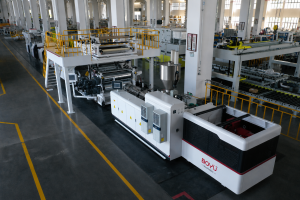
Choosing the Right Partner for Reliable Extrusion Solutions
At Boyu Machinery, we focus on the engineering and manufacturing of extrusion equipment and integrated production solutions. Our systems are designed to support stable operation, efficient production, and consistent process control in industrial applications.
Our company strengths include:
- 28 years of industry experience
- Over 120 patents in extrusion technology
- ISO-certified manufacturing standards
- Solutions used in more than 66 countries
Our equipment portfolio covers a range of extrusion applications, including profile extrusion lines, PVC foam board production lines, and marble sheet extrusion systems, along with customized solutions developed for different processing requirements. These systems are designed to accommodate various material characteristics and production specifications.
We continue to improve our capabilities in system integration, automation control, and energy-efficient design, supporting manufacturers in achieving stable production performance and consistent product quality.
Conclusion
Selecting the right extrusion line requires balancing performance stability, system coordination, and long-term reliability. Boyu Machinery provides integrated extrusion solutions designed for diverse industrial applications, supporting consistent production and process control.
For tailored solutions or further information, please contact us to discuss your specific requirements.
Reference
- https://www.plasticstoday.com/plastics-processing/extrusion-basics-to-optimize-output-run-smarter-not-faster
- https://www.conairgroup.com/resources/resource/extrusion-processing-basic-guide-to-auxiliary-equipment/