
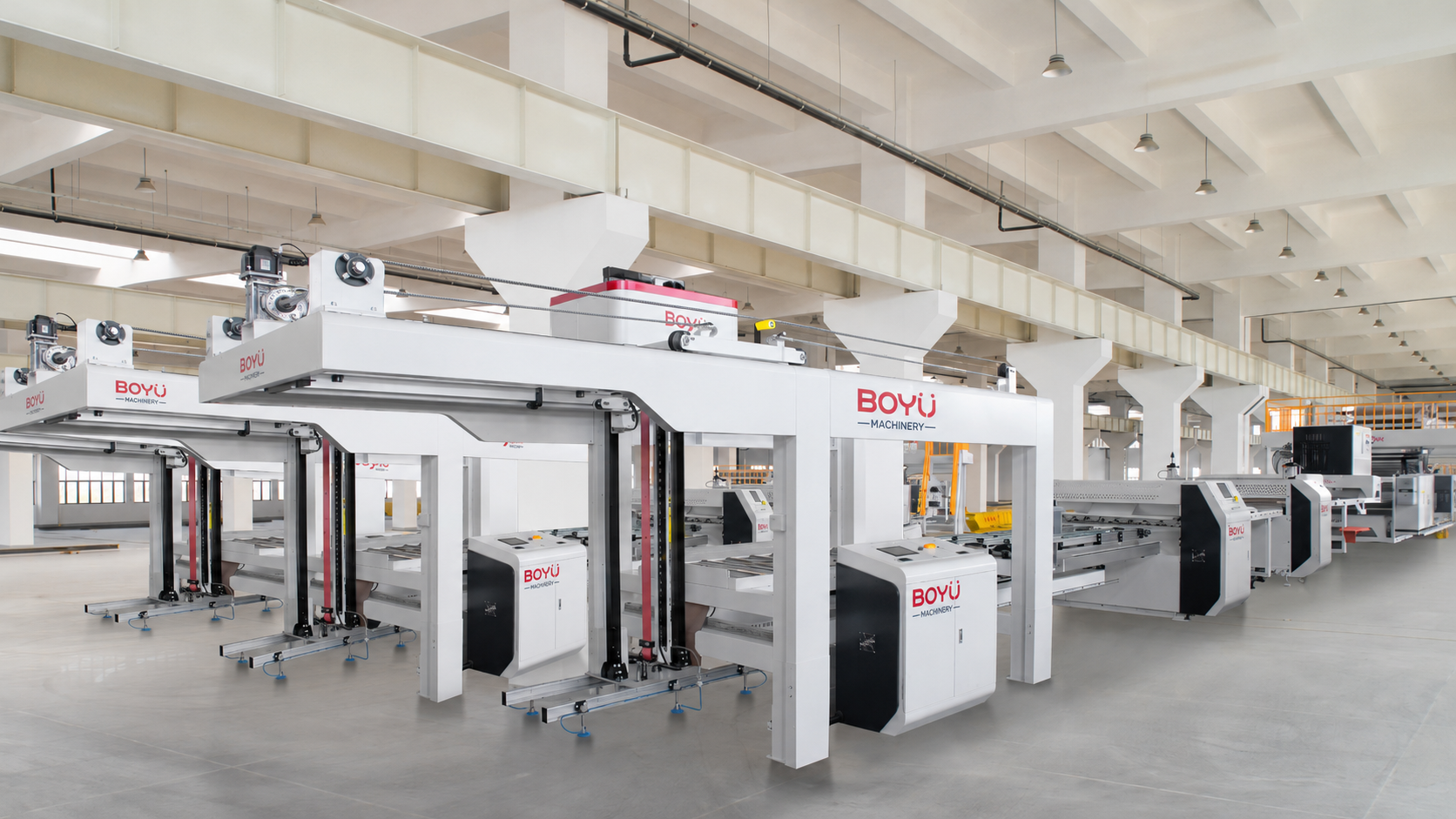
Energy consumption has become a key concern in modern extrusion line operations, directly affecting production costs and sustainability. By understanding extrusion energy consumption and identifying where energy is used across the process, manufacturers can implement practical strategies to improve efficiency and reduce overall operating expenses.
Where Does Extrusion Energy Consumption Come From?
When analyzing extrusion energy consumption, it is necessary to start from the overall operating structure of the extrusion line. Energy consumption is not concentrated in a single stage but is distributed across drive, heating, cooling, and auxiliary systems. These sections together determine the overall extrusion energy efficiency level.
Drive System Energy Demand (Motor and Screw)
When the extruder is running, the main motor continuously drives the screw to complete material conveying and plasticizing. This is the largest source of energy consumption in the entire line. Motor efficiency, load matching, and screw structure design all directly affect energy consumption per unit output.
Heating System and Thermal Loss
Barrel zone heating is used to achieve material melting and temperature control, and it is one of the main contributors to energy consumption in the extrusion process. If insulation is insufficient or temperature control is inaccurate, heat loss occurs easily, resulting in additional energy consumption.
Cooling System Operation
During product forming, water cooling, air cooling, and chiller systems are used to maintain stable temperature conditions. Circulating water pumps and fans must operate continuously, and their electricity consumption accounts for a significant proportion of the total during long production cycles.
Material Processing Efficiency
When melting is uneven, plasticizing efficiency is insufficient, or process parameters fluctuate, defective products or reprocessing may occur. This type of hidden energy consumption is often overlooked but can significantly increase overall extrusion energy consumption levels.
Auxiliary and Downstream Equipment
Haul-off machines, cutting systems, vacuum devices, and other auxiliary equipment operate in coordination along the entire extrusion line. Although individual power may not be high, their long operating time means their cumulative energy contribution cannot be ignored.
By systematically breaking down each stage above, energy distribution can be more clearly identified, providing a foundation for reducing extrusion energy consumption and achieving extrusion line energy saving.
How to Reduce Energy Consumption in Extrusion Lines
To achieve stable extrusion line energy saving, overall optimization is required from equipment selection, process control, to system coordination. Based on practical production experience, the following are key strategies to improve extrusion energy efficiency in extrusion lines:
1. Align Equipment Configuration with Actual Production Load
To reduce extrusion energy consumption, equipment configuration should match the actual production load to avoid long-term energy waste caused by improper selection.
In actual production, equipment should be selected based on product specifications and output requirements rather than maximum capacity. For example, when a large extruder is used for small products, low screw speed and insufficient shear heating increase reliance on electric heating, thereby increasing overall energy consumption.
At the same time, long-term low-load operation should be avoided. When motor load is below about 60% of rated capacity (depending on material properties, screw design, and process settings), efficiency drops significantly. Therefore, production output or configuration should be adjusted to keep equipment operating in a higher efficiency range.
When conditions allow, operating close to design conditions improves shear heat utilization and reduces dependence on electrical heating, thereby directly lowering extrusion energy consumption.
2. Maintain Stable Process Conditions
The core goal of stable processing is to avoid energy being consumed through repeated adjustments.
In actual production, whenever temperature, pressure, or output speed fluctuates, the system must “correct the condition” through reheating, speed adjustment, or process compensation. These actions all directly increase energy consumption. Therefore, the key to reducing energy consumption is to maintain a continuous operating state with minimal or no adjustments.
This can be achieved through:
- Upgrading the temperature control system to PID control to maintain temperature within ±1–2°C, reducing repeated heating/cooling
- Monitoring melt pressure and screw torque in real time to adjust in advance rather than after deviations occur
- Using melt gear pumps in applications requiring high stability to ensure continuous and stable material flow
These measures work together as: process fluctuation reduction → fewer system compensation actions → direct reduction of unnecessary energy consumption.
3. Improve Overall Thermal Efficiency
Extrusion is a typical thermal processing operation, so thermal management capability directly affects the overall energy consumption structure.
First, in terms of heat loss control, adding barrel insulation layers and optimizing insulation in high-temperature zones can effectively reduce heat loss to the environment, typically reducing heating energy consumption by about 20%–25% in practical applications.
Second, in waste heat utilization, some systems recover heat generated during heating and reuse it for raw material preheating or auxiliary plant heating, thereby reducing the need for new energy input and improving overall energy utilization.
In heating methods, induction heating offers higher efficiency and faster response compared to traditional resistance heating. In cooling systems, overcooling should be avoided; the cooling water temperature should be slightly increased within dimensional accuracy requirements to reduce unnecessary energy consumption.
4. Enhance System-Level Coordination
Line speed mismatch essentially results in “non-productive energy consumption,” which is a very hidden source of extrusion line energy consumption.
For example, if extrusion speed is higher while haul-off speed is lower, material accumulation or forced deceleration occurs. If the cooling system does not match production output, overcooling or waiting time occurs. These situations all increase energy consumption per unit output.
To reduce this, the focus is to make the entire line operate according to production rhythm rather than independent machine operation:
- Use VFD (variable frequency drive) control to dynamically match equipment speed with actual output
- Implement closed-loop control between extrusion and haul-off to avoid excessive stretching or rollback adjustments
- Synchronize cooling system operating cycles with production output to avoid long idle running
- Adjust auxiliary equipment (pumps, fans, etc.) based on demand instead of continuous full-load operation
The core objective is: the entire production line should consume energy only in “effective production states,” rather than during adjustment, waiting, or compensation.
5. Adopt Energy-Efficient Core Components
Improving efficiency from the equipment source is an important foundation for long-term extrusion line energy saving.
For example, using IE4 or IE5 high-efficiency motors (such as permanent magnet synchronous motors) can significantly improve motor efficiency. Optimizing screw structures (such as barrier or variable compression ratio designs) can improve plasticizing quality while reducing energy loss by about 12%–22%.
In heating systems, ceramic heaters have higher thermal efficiency compared to traditional heating bands. Melt gear pumps can also share the pressure-building load of the screw, allowing the main extruder to operate under lower energy conditions, thereby reducing overall system energy consumption.
Choosing Boyu Machinery: A High-Efficiency Extrusion Solution for Sustainable Manufacturing
We are Boyu Machinery, a manufacturer of high-performance extrusion equipment and system solutions focused on sustainable and energy-efficient production.
Choosing our solution is a strategic decision for manufacturers seeking high-performance extrusion solutions with a focus on sustainability. Founded in 1998, we have integrated “energy saving” as one of our four core business philosophies, reflecting a deep commitment to eco-efficient manufacturing. Our diverse extrusion production lines—ranging from SPC and LVT to PVC foam boards, profiles, and imitation marble sheets—are engineered to deliver high productivity with low power consumption.
This efficiency is driven by advanced PLC programmable control systems (Siemens or Omron), which allow for real-time monitoring and precision adjustments to optimize energy usage and reduce material waste. With over 120 technical patents and a strong focus on Industry 4.0 integration, we provide innovative, automated solutions that ensure operational stability and longevity.
Furthermore, by incorporating world-class components from brands like Siemens, Schneider, and NSK, we ensure that our machinery maintains peak performance across diverse industrial sectors, including construction, automotive, and consumer goods.
Learn more: Boyu Machinery’s Journey as a Leading Extrusion Equipment Manufacturer
Conclusion
Reducing energy consumption in extrusion lines requires a systematic approach covering equipment configuration, process stability, thermal efficiency, and system coordination. Boyu Machinery provides energy-efficient extrusion production lines and integrated solutions designed to improve performance and reduce operating costs.
For tailored technical support and solutions, please feel free to contact us.