
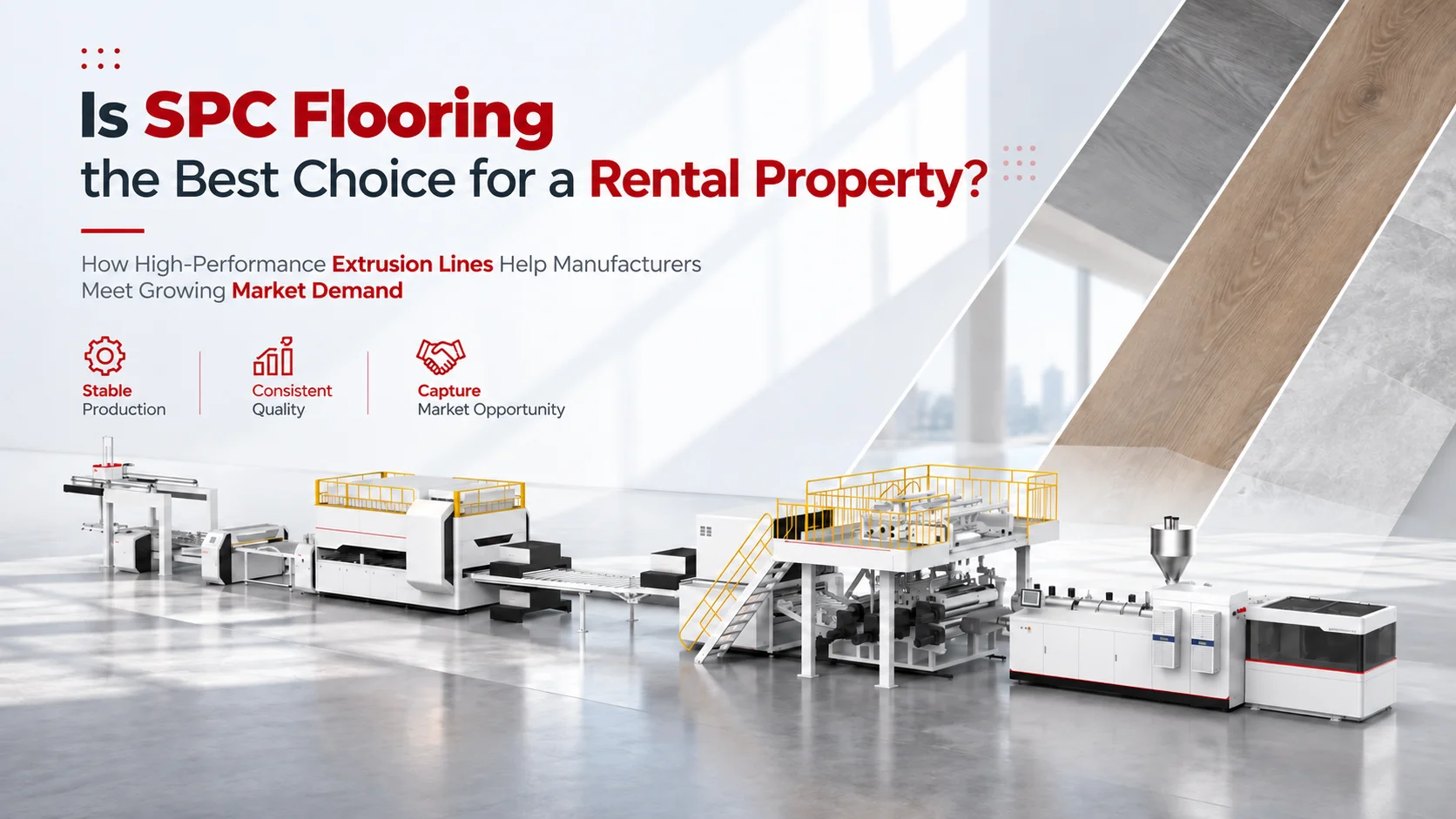
To a large extent, yes. As demand for durable and cost-effective materials grows, SPC flooring demonstrates significant market potential in the rental sector. This article explores its core advantages and discusses how manufacturers can leverage high-performance extrusion lines to ensure consistent quality and capitalize on this commercial opportunity.
Why the Market Is Moving Toward SPC Flooring
Three factors are driving rapid SPC adoption in rental and residential markets — creating significant opportunities for flooring manufacturers and equipment investors:
1. Significant Cost Advantage Over Tiles and Hardwood
Cost remains the primary driver of SPC adoption. SPC material typically runs $3–$10 per square foot, while ceramic tile installations reach $7–$27 per square foot and hardwood ranges from $6–$25+ per square foot fully installed. Beyond material pricing, SPC eliminates the need for cement, grout, and adhesive — further reducing project costs and simplifying the supply chain for contractors and distributors.
2. Click-Lock Installation Eliminates Skilled Trade Labor
Traditional ceramic tile work demands a skilled mason, wet mortar, and days of curing. Hardwood requires a professional carpenter for precise nailing or gluing. SPC flooring bypasses both with a click-lock system — planks snap together directly over the existing subfloor with no glue and no nails.
This allows a single person to complete a standard room in just a few hours, making SPC particularly attractive for renovation projects and rental properties where non-permanent, damage-free installation is essential.
3. Waterproof, Dimensionally Stable, and Low-Maintenance
SPC’s rigid stone-polymer core delivers 100% waterproof performance and strong resistance to dents, scratches, and temperature fluctuations. Where hardwood can warp in humid climates and tile grout may deteriorate over time, high-quality SPC flooring maintains its structural integrity for 15–25 years with minimal maintenance — sweep and mop is all that’s required.
SPC Flooring vs. Ceramic Tiles vs. Hardwood: A Quick Comparison
The following table summarizes how SPC flooring compares to ceramic tiles and hardwood across key performance and cost metrics:
| Feature | SPC Flooring | Ceramic Tiles | Hardwood |
| Material Cost | $3–$10/sq ft | $2–$15/sq ft | $2–$7/sq ft |
| Total Installed Cost | $5–$15/sq ft | $7–$27/sq ft | $6–$25+/sq ft |
| Installation | DIY click-lock, no wet work | Mason required, wet mortar + grout | Carpenter required, nail/glue-down |
| Waterproof | Yes, 100% | Tiles yes, but grout can leak | No, prone to warping |
| Lifespan | 15–25 years | 20–30+ years | 20–50+ years (with refinishing) |
| Maintenance | Very Low | Moderate (grout cleaning) | High (refinishing, sealing) |
| Renter-Friendly | Removable, no damage | Permanent installation | Permanent installation |
*Note: Actual costs may vary depending on location, specific materials, and project complexity. For precise pricing, end users should consult local flooring contractors.
Further reading: Is SPC Flooring the Best Choice for a Bedroom?
Challenges and Considerations
Of course, SPC flooring is not without its challenges—and many of these pain points can be traced directly back to the manufacturing process.
1. Inherent Material Limitations
Due to its rigid stone-polymer core, SPC naturally feels harder and cooler underfoot than carpet or natural wood, and it is highly unforgiving of uneven subfloors.
For flooring manufacturers, this inherent rigidity means there is zero margin for error in production precision. Because the planks cannot flex over subfloor imperfections, manufacturers must maintain extremely tight thickness tolerances during extrusion to prevent stress on the locking system. Additionally, to compensate for the hard underfoot feel, producers often need to incorporate IXPE/EVA underlayment lamination.
2. Manufacturing Quality Risks
Beyond the inherent material traits, the most common end-user complaints—such as click-lock failures, core deformation, and premature wear—are actually not flaws of the SPC material itself, but the result of poor manufacturing.
Inconsistent core density and poor dimensional tolerances during the extrusion process can severely compromise the floor’s durability.
This means that to eliminate the most costly product defects and produce SPC flooring that stands the test of time, manufacturers must start at the source: the extrusion production line.
The Source of Premium Quality: Boyu Machinery SPC Flooring Extrusion Line
The quality challenges outlined above — core density consistency, dimensional stability against warping, and surface uniformity — are fundamentally tied to the core extrusion equipment used in production. For flooring manufacturers looking to reduce defect rates and meet growing market demand, choosing a reliable production line is the foundation of success.
Boyu Machinery offers CE-certified SPC Flooring Extrusion Lines designed around three core strengths:
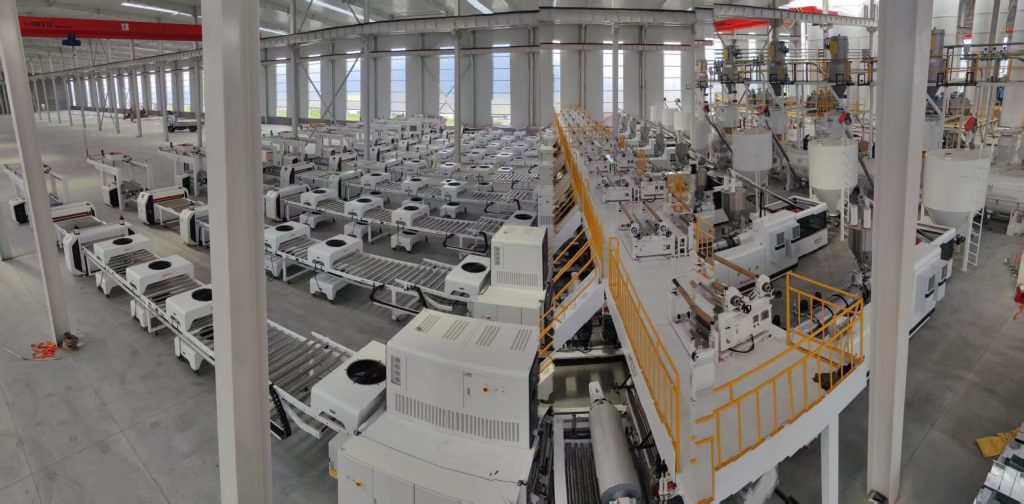
- High-Efficiency SPC Extrusion System: Utilizing advanced conical or parallel twin-screw extruders combined with intelligent PLC control systems (Siemens/Omron) to deliver homogeneous mixing, precise temperature/pressure control, and high production speeds.
- Stable and Consistent Board Quality: Equipped with precision T-dies and advanced calendaring machines to ensure uniform core density, exceptional surface flatness, and strict dimensional stability to prevent warping.
- Customized SPC Flooring Production Solutions: Backed by nearly 30 years of industry expertise and numerous technical patents, line configurations can be tailored to specific production requirements, giving manufacturers flexibility to serve different market segments.
Secure Your Position in the Growing SPC Flooring Market
When evaluated on cost, installation efficiency, and long-term durability, SPC flooring presents a decisive advantage for the rental and residential markets. However, delivering the premium quality that today’s consumers expect starts with the right manufacturing equipment. Boyu Machinery‘s SPC Flooring Extrusion Lines provide the precise thickness control, uniform core density, and high-efficiency output you need to eliminate costly defects and dominate your market segment.
Is your current extrusion equipment holding back your production yield?
Contact Boyu Machinery today to discuss your customized SPC production solution and take your manufacturing capabilities to the next level.
Frequently Asked Questions
How can manufacturers reduce click-lock failure rates in SPC flooring?
Click-lock issues typically stem from dimensional inconsistencies during extrusion. By upgrading to an advanced extrusion line—like Boyu Machinery’s twin-screw systems with precision T-dies—manufacturers can guarantee the strict thickness tolerances required for a flawless downstream click-lock yield.
What causes SPC planks to warp or deform over time?
Warping is primarily caused by uneven core density and unrelieved internal stress during manufacturing. Investing in extrusion lines with intelligent PLC temperature control and advanced calendaring systems ensures uniform stress distribution and eliminates long-term deformation.
How does a high-quality extrusion line impact SPC flooring production costs?
A premium extrusion line reduces per-unit costs by increasing output speed, minimizing energy consumption, and dramatically lowering scrap rates. Boyu Machinery’s systems utilize optimized screw configurations to maximize material mixing efficiency and overall profitability.
References
- https://www.homeadvisor.com/cost/flooring/install-vinyl-or-linoleum-flooring/
- https://www.forbes.com/home-improvement/flooring/ceramic-tile-installation-cost/
- https://www.fixr.com/costs/hardwood-floor-installation